Twelve recommendations to make homelessness rare, brief and non-recurring — and an interactive report that lets a policymaker see the system they are trying to fix.
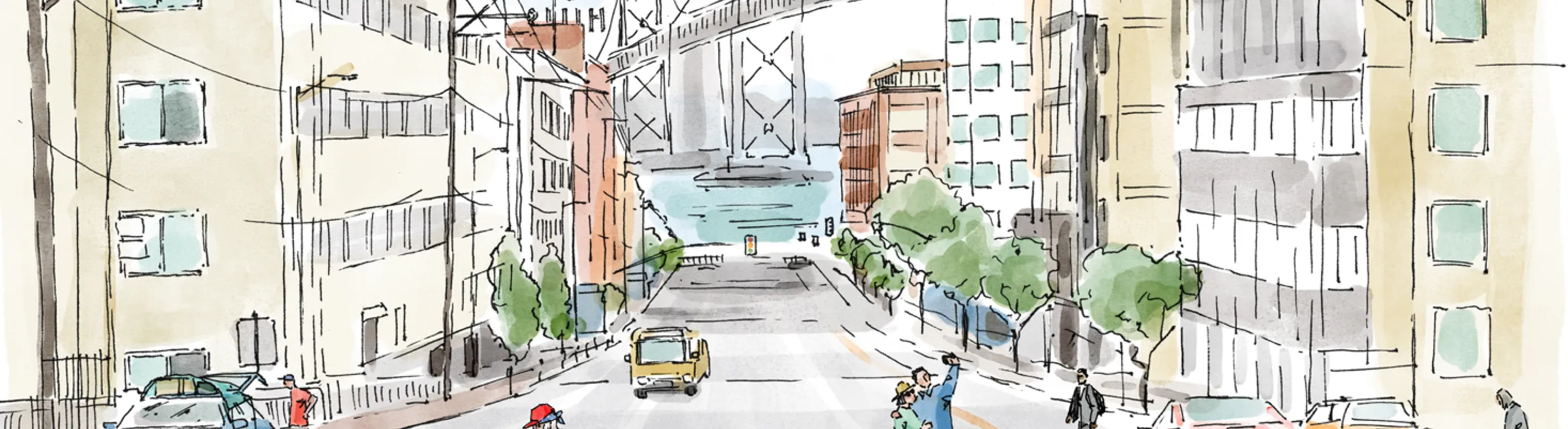
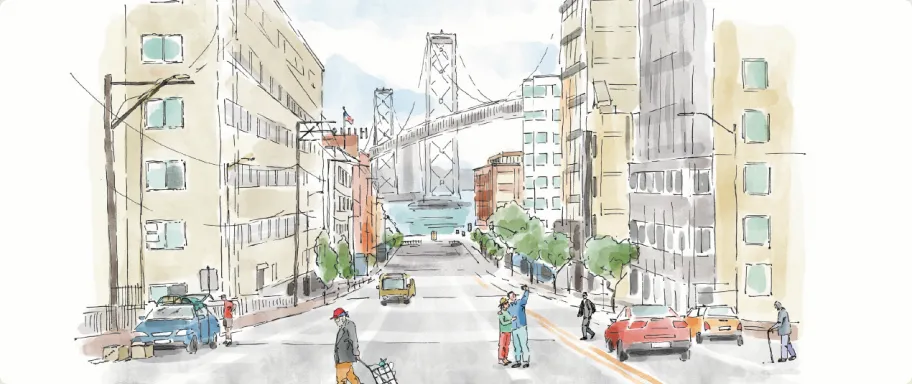
San Francisco is world-renowned for the Golden Gate Bridge and for being the birthplace of Airbnb, OpenAI, Levi Strauss and Uber. It is also known for the 8,300 people within its boundaries who sleep in doorways, cars and tents on any given night.
Despite billions invested over two decades, there is no accurate account of what the City spends — the official figures leave out the burden on hospitals and the cost to the judicial and detention systems. The system is fragmented, gapped, and managed through a structure that would befuddle someone in the best of circumstances.
So the report’s first job was not to argue. It was to make the system visible.
The report earns its recommendations rather than opening with them. You see the scale, then the system, then the people inside it — and only then the plan.
01
Intro
Breaking the cycle of homelessness in San Francisco.
02
Context
Homelessness in San Francisco, and the methodology behind the report.
03
Today
The challenges facing service providers, City leaders, and most importantly unhoused individuals.
04
People
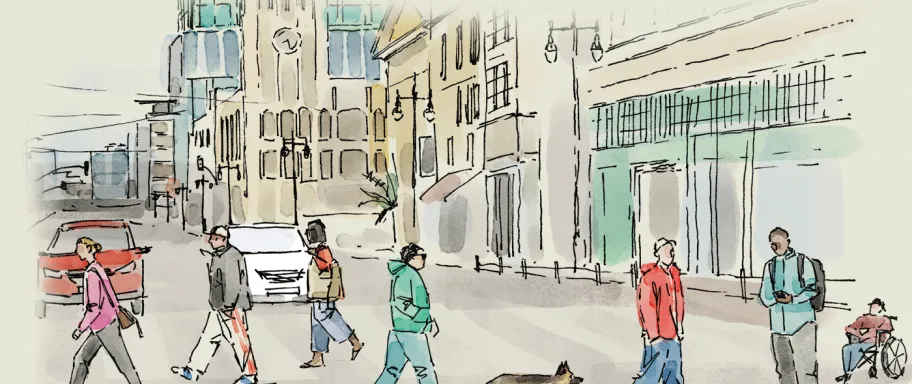
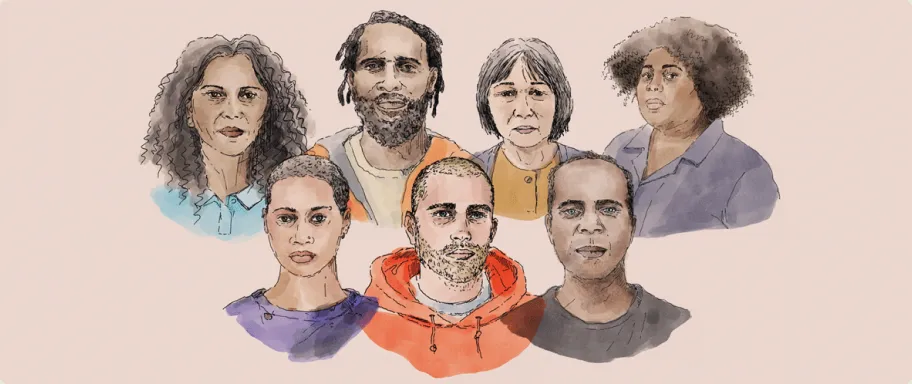
The many different faces of homelessness.
05
Tomorrow
Ideas for shaping a better response to the crisis.
06
Plan
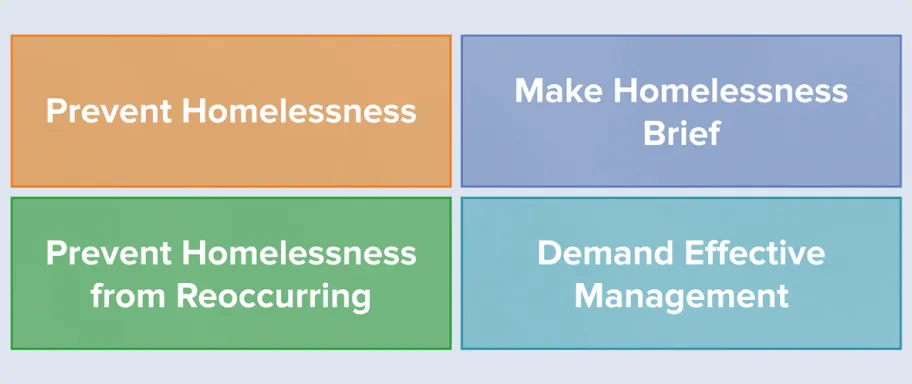
Twelve steps to make homelessness rare, brief and one-time — with disciplined management and clear measurement.
03 · The centrepiece
One chart that does the arguing.
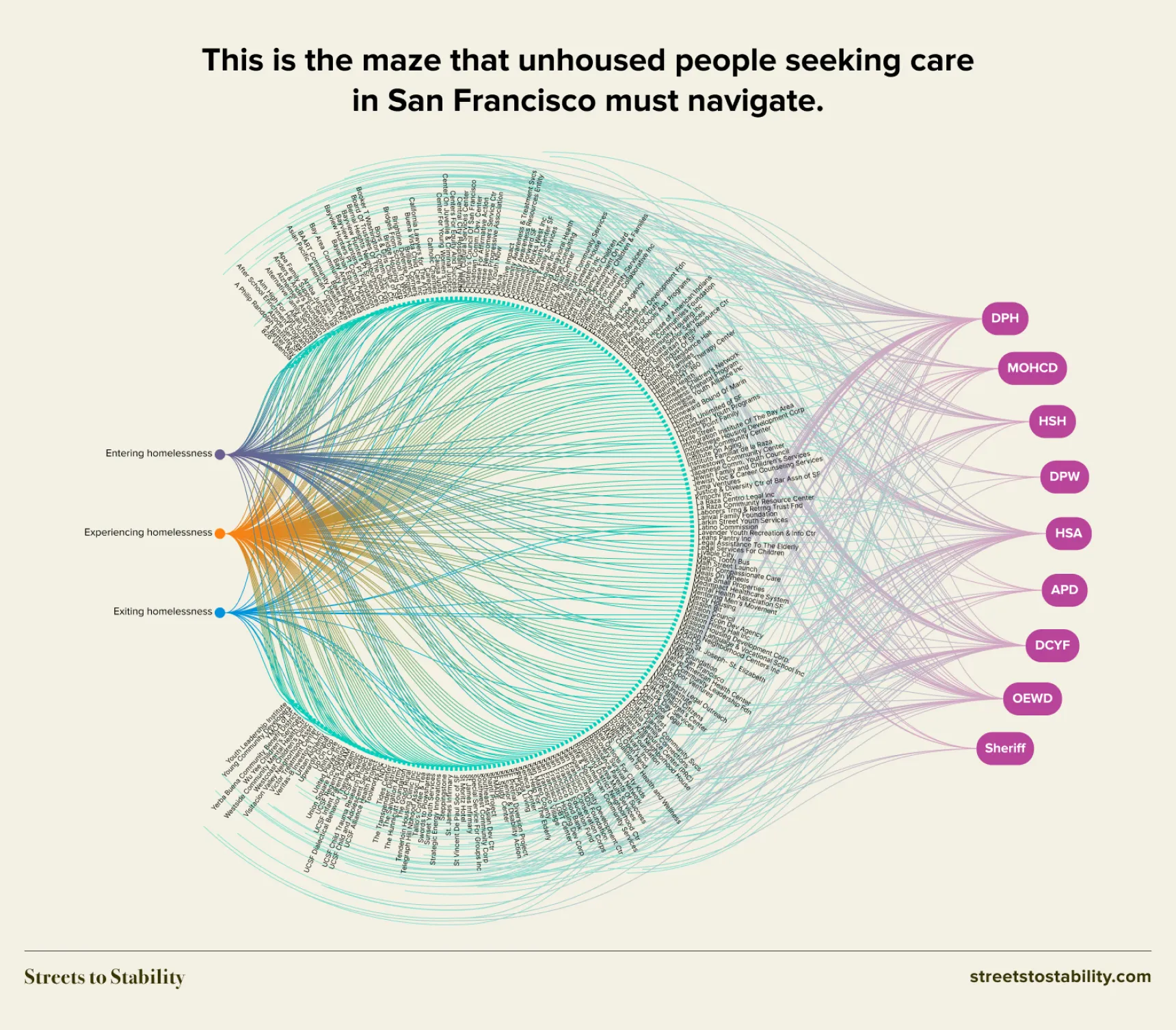
Nobody who reads this diagram still believes the system is simple. That is the whole job — the argument is won before a single recommendation is read.
Three stages — where a person is. Entering, experiencing, exiting homelessness. Hover one and the ring lights up: “Exiting homelessness: 30 support options.”
232 providers — who could help. Every service provider in the city, named, arranged around the ring. The density is the point: this is what a person is asked to navigate unaided.
Nine agencies — who pays. DPH, MOHCD, HSH, DPW, HSA, APD, DCYF, OEWD. Hover one: “Department of Homelessness and Supportive Housing funds 25 service providers.”
“This is the maze that unhoused people seeking care in San Francisco must navigate.”
The line that sits under the diagram on the live site. The next one is the brief for the entire project: “Let’s untangle homelessness.”
04 · Delivered
A report you can click, carry and cite.
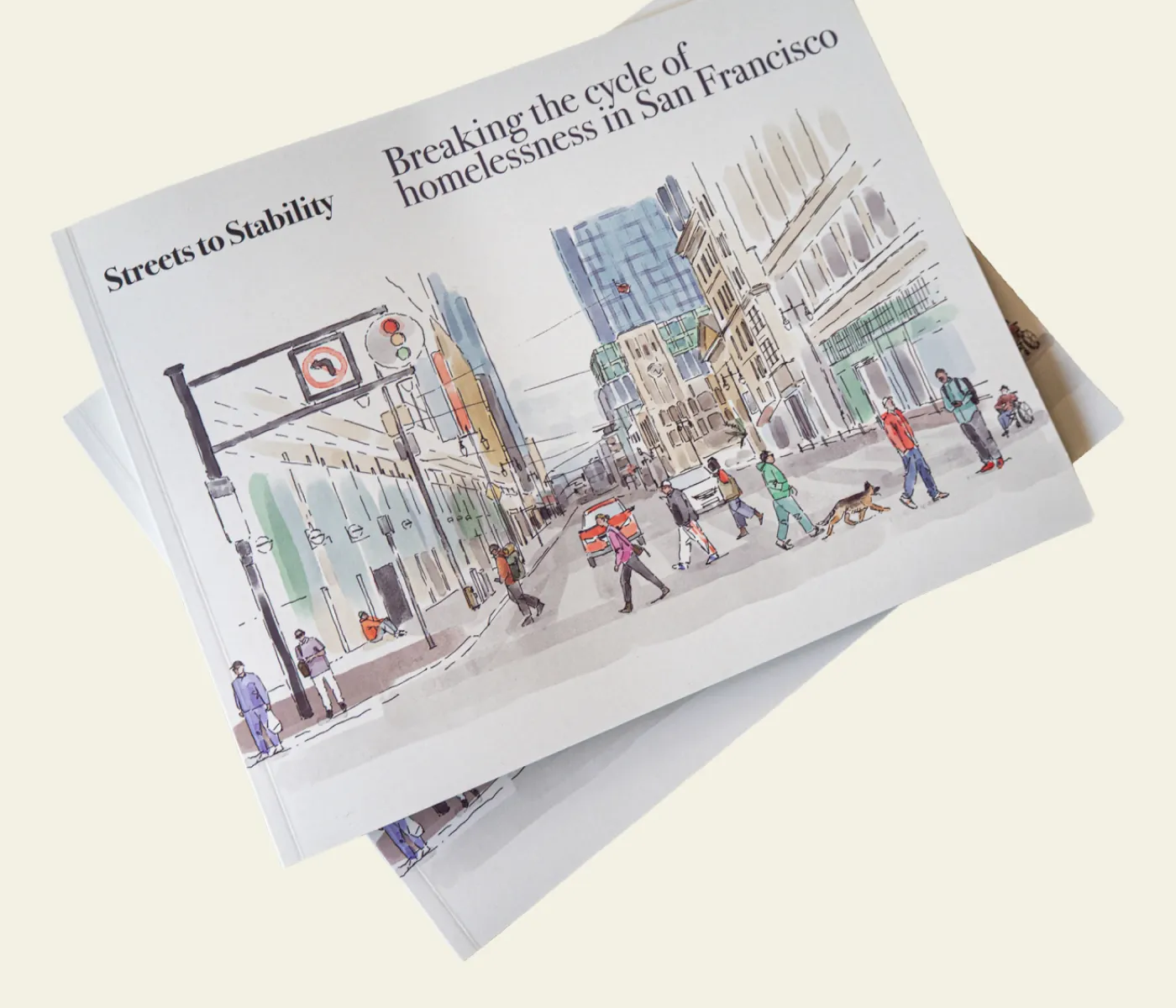
Delivered as an interactive microsite, a printed booklet, and a downloadable report — launched at an event with Mayor Daniel Lurie in April 2025.
JFA’s role: creative direction and data visualization across the whole report, from the ecosystem diagram to the printed edition.
Built with D3.js and Observable, with hand-drawn illustration carrying the human register the charts deliberately do not.
CRANKSTART
Crankstart is a San Francisco family foundation devoted to bolstering the foundations of a just society — wider access to better education, jobs with prospects for advancement, housing security, social welfare and the protection of civil rights.